
V-Belt vs Timing Belt vs Flat Belt: Choosing the Right Belt for an Industrial Drive
V-Belt vs Timing Belt vs Flat Belt: Choosing the Right Belt for an Industrial Drive
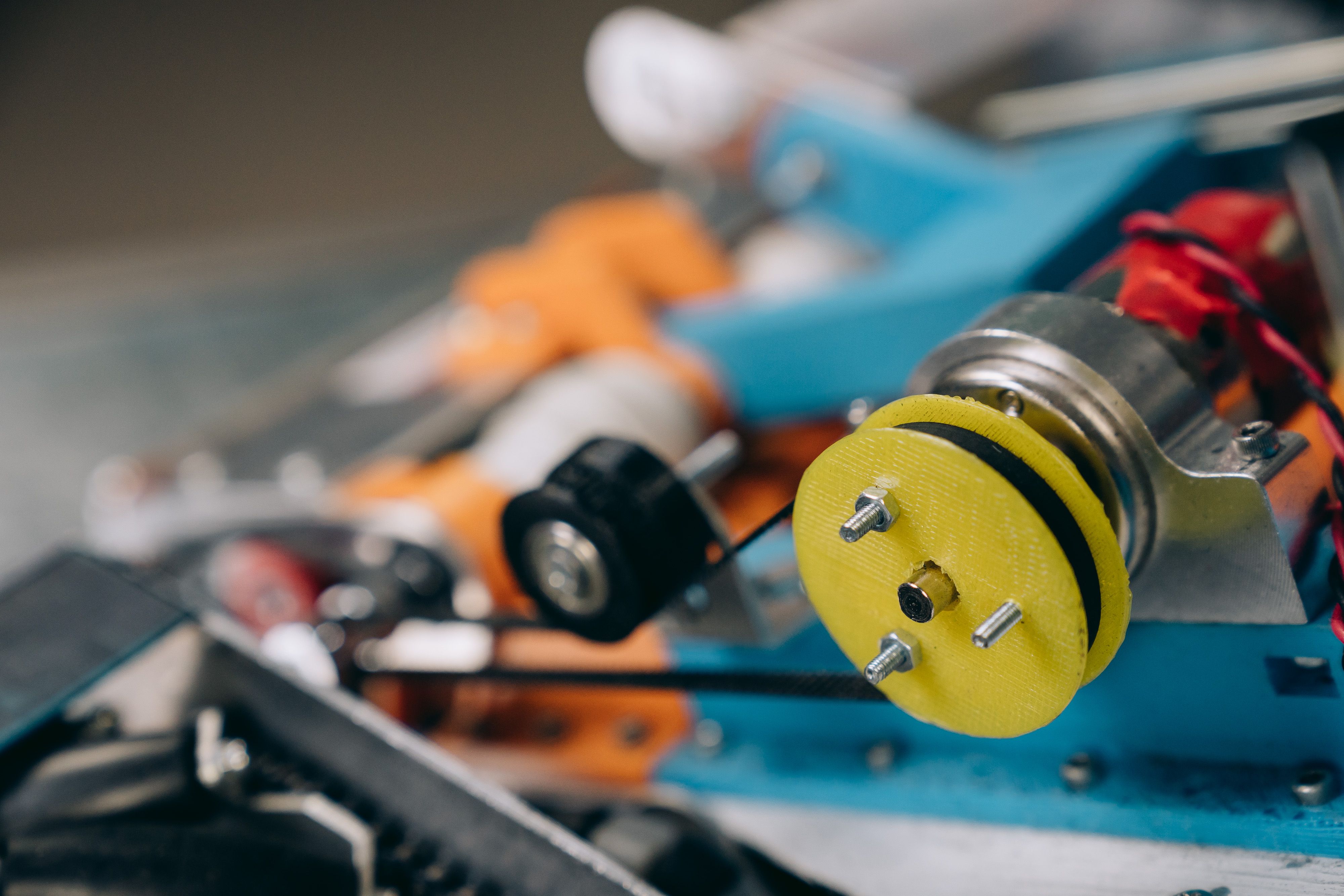
Belts are among the cheapest parts in a drive train and among the most common causes of unplanned stops. Most early belt failures are not manufacturing defects. They come from choosing a belt type that does not suit the load, the speed accuracy required, or the environment it runs in.
This guide is written for maintenance engineers and procurement officers at UAE plants. It compares the three main belt families, shows where each one fits, and explains what to check before you replace like-for-like and repeat the same failure.
The Three Belt Families at a Glance
All three transmit power from a driver pulley to a driven pulley. They differ in how they grip, and that difference decides almost everything else.
- V-belts grip through friction on the angled sidewalls of a groove. The wedge action raises grip as tension rises.
- Timing (synchronous) belts have teeth that mesh with a toothed pulley. Power moves by positive engagement, not friction.
- Flat belts run on smooth pulleys and rely on friction across the whole belt face.
V-Belts: The General-Purpose Workhorse
V-belts suit fans, blowers, compressors, pumps and general machinery where some slip is acceptable and shock loads occur. Their friction grip lets the belt slip slightly under an overload, which can protect the driven equipment.
Strengths
- Tolerant of moderate misalignment and shock loading
- Simple to install and tension
- Available in classical, narrow (wedge) and banded or multi-rib forms
- Multiple belts can share a heavy load on one sheave
Limitations
- Slip means the speed ratio is never exact
- Belts on a multi-groove drive must be replaced as a matched set, or the load will not share evenly
- Sidewall wear changes how the belt sits in the groove and reduces grip
Timing Belts: When Speed Ratio Must Be Exact
A timing belt cannot slip in normal operation, so the driven shaft stays locked to the driver. That makes it the choice for indexing, packaging, positioning and any drive where a fixed speed ratio matters.
Strengths
- Precise, repeatable speed ratio
- No lubrication needed
- Lower installed tension than a friction drive for the same power, which eases bearing loads
Limitations
- Less forgiving of shock loads and misalignment; tooth damage or flange rubbing follows quickly
- Pulleys must match the tooth profile and pitch exactly
- A tooth failure usually means a stopped machine, not a gradual decline
Flat Belts: High Speed and Long Spans
Flat belts handle high speeds, long centre distances and light-to-medium loads with low vibration. They appear in conveying, textile, printing and some machine-tool applications. Grip depends on the belt surface and wrap angle, so keeping the contact face clean matters more than with other types.
- Smooth, quiet running at speed
- Flexible, so small pulley diameters are possible with the right belt construction
- Sensitive to oil or dust on the surface, which reduces friction
A Practical Selection Sequence
- Does the speed ratio have to be exact? If yes, a timing belt is the starting point. If small slip is acceptable, move on.
- Is the load steady or shock-prone? Shock favours V-belts, which absorb it better than a toothed drive.
- What is the speed and centre distance? High speed over a long span points towards flat belts or high-grade narrow V-belts.
- What is the environment? Heat, dust, oil mist and washdown conditions all narrow the choice of belt compound and construction.
- What space and pulley sizes are fixed? Existing pulleys often limit the choice, so confirm groove or tooth profile before ordering.
Gulf Conditions and Belt Life
Sustained high ambient temperature accelerates ageing of belt compounds. Rubber hardens, loses flexibility, and cracks across the underside where it bends around the pulley. Plants with enclosed guards, hot machine rooms or outdoor drives should inspect belts more often than a temperate-climate maintenance schedule suggests.
Fine dust is a second factor. Sand and dust that settle in V-grooves act as an abrasive and can polish the belt sidewalls, which lowers grip. Keeping guards intact and grooves clean costs little and extends belt life.
Because heat and dust vary between sites, confirm the temperature range and exposure conditions with your supplier when specifying a replacement rather than assuming a standard belt will cope.
Reading a Failed Belt
A failed belt tells you why it failed. Before fitting the replacement, look at the damage.
- Glazed, shiny sidewalls on a V-belt: slip, usually from low tension, worn grooves or overload.
- Cracking across the underside: age, heat, or a pulley diameter too small for the belt section.
- One edge worn or frayed: pulley misalignment or a bent or damaged guard rubbing the belt.
- Cord or tooth damage on a timing belt: shock load, a foreign object, or incorrect installation tension.
- Swollen, soft belt: oil or chemical contamination of the belt compound.
- One belt of a set failing early: uneven load share, often from mixed belt ages or a bent sheave.
Pulleys: Check Them Before You Blame the Belt
A new belt on a worn pulley wears out quickly. Worn V-grooves let the belt bottom out so the sidewalls no longer grip. Misaligned shafts push the belt to one side and shorten its life far more than normal wear does.
At every belt change, check:
- Groove or tooth wear against the correct profile
- Shaft and pulley alignment, using a straightedge or alignment tool
- Pulley runout and any visible damage or corrosion
- Bearing condition on both shafts, since a failing bearing mimics a belt problem
Installation and Tension
Incorrect tension is a leading cause of premature belt failure. Too loose and a V-belt slips and overheats. Too tight and it overloads the shaft bearings, shortening bearing life as well as belt life. Follow the tension method and values given by the belt manufacturer for the specific belt and drive. Re-check tension after the initial run-in period, because new belts settle.
Never roll or pry a belt onto a pulley. Shorten the centre distance, fit the belt, then tension it.
Specifying a Replacement Correctly
To avoid ordering the wrong part, collect the following before you request a belt:
- Belt type and any markings printed on the old belt
- Section or pitch, and length
- Number of belts on a multi-belt drive
- Pulley sizes and shaft centre distance
- Operating speed, power transmitted, and ambient conditions
If the markings on the old belt are unreadable, measuring the pulleys and the drive geometry is more reliable than guessing from the damaged belt.
Conclusion
There is no single best belt. V-belts forgive misalignment and shock, timing belts hold an exact ratio, and flat belts suit fast, long-span drives. Matching the belt to the duty, then checking pulleys, alignment and tension, prevents most repeat failures.
Morris supplies belts, pulleys and related power transmission components as part of its industrial spare parts range. You can also read about our wider services or start from our home page.
Talk to Morris Elevators
If you need help identifying a belt or pulley for a drive at your plant, contact the Morris Elevators team on +971 2 555 2727 or at [email protected]. We are based at Mazyad Mall, MBZ City, Abu Dhabi.