
5 Critical Safety Features Every Modern Building Needs
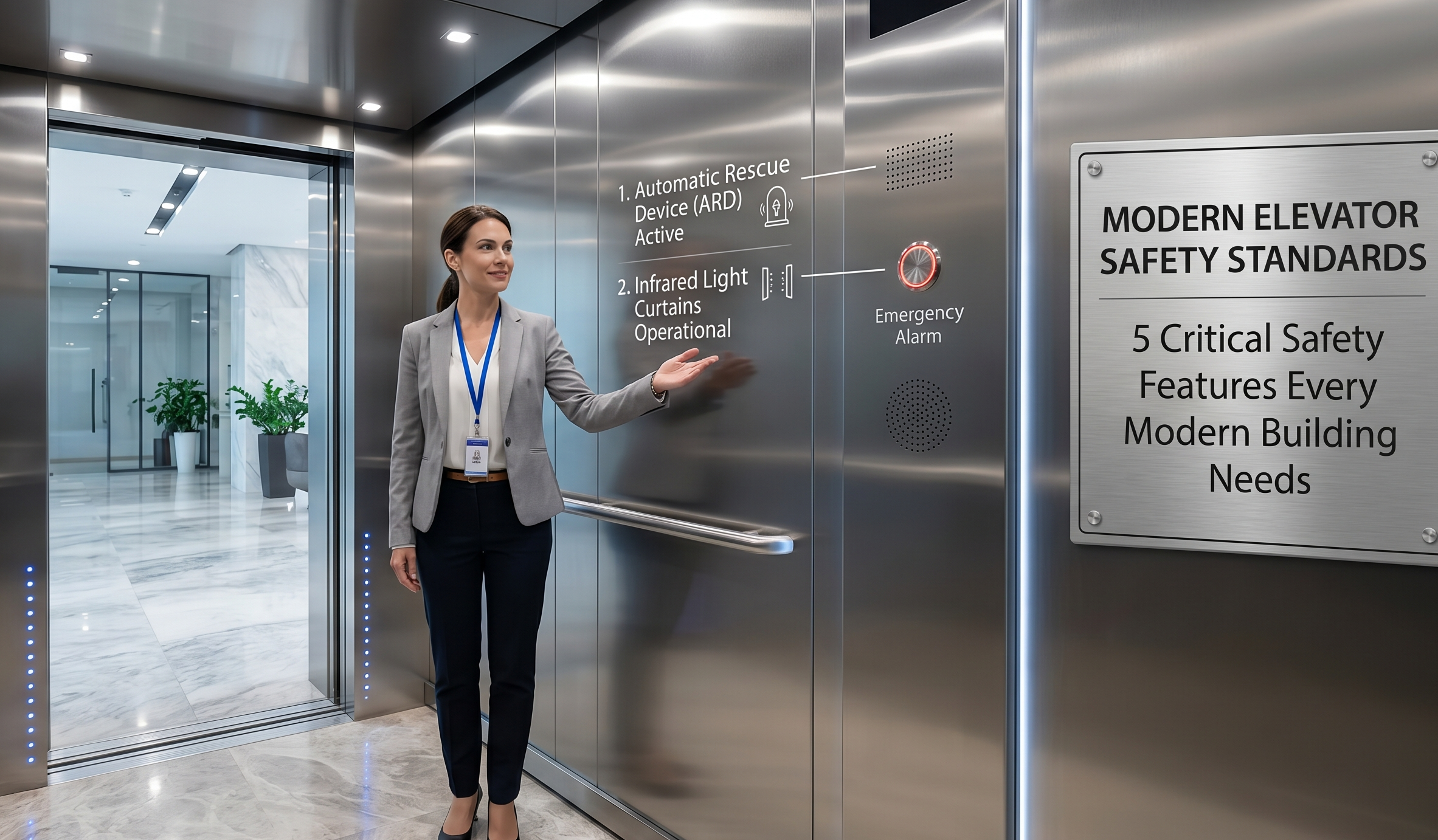
In the fast-paced urban landscapes of cities like Dubai and Abu Dhabi, the vertical heartbeat of a building—its elevator system—is often taken for granted. However, for building owners and facility managers, elevator safety isn't just a regulatory requirement; it is a cornerstone of tenant trust and property value.
As technology evolves, "standard" safety is no longer enough. Modern buildings require intelligent systems that can anticipate issues before they become emergencies. Here are the five critical safety features that every modern elevator installation must have.
1. Automatic Rescue Device (ARD)
There is nothing more unsettling for a passenger than being trapped in a dark elevator during a power failure. An Automatic Rescue Device (ARD) is a battery-operated system that detects a power outage and automatically brings the elevator car to the nearest floor, opening the doors to allow passengers to exit safely. In regions with high-rise density, this is an absolute essential for peace of mind.
2. Infrared Light Curtains
Old-fashioned mechanical safety edges required the door to physically touch an object to retract. Modern systems use Infrared Light Curtains—a 2D or 3D invisible screen of light beams across the entrance. If a person, a pet, or even a small object breaks a single beam, the doors instantly stop and reopen without any physical contact, preventing injuries and door damage.
3. Overspeed Governor & Safety Gear
While modern elevators are incredibly secure, the Overspeed Governor acts as the ultimate mechanical watchdog. If the elevator exceeds its rated speed—whether ascending or descending—this centrifugal device trips a mechanical brake (the safety gear) that clamps onto the guide rails, bringing the car to a controlled stop independently of the main motor.
4. Emergency Communication Systems (IoT Integration)
A simple "Alarm" button is no longer the gold standard. Modern buildings are moving toward IoT-enabled communication. These systems provide a 24/7 dedicated voice link to emergency responders and, more importantly, transmit real-time diagnostic data. This allows technicians to know exactly what triggered the stop before they even arrive on-site.
5. Fireman’s Drive & Emergency Return
In the event of a fire, elevators must behave intelligently. The Fireman’s Drive ensures that when the building's fire alarm is triggered, all elevators immediately return to a designated floor (usually the lobby), park with the doors open, and go out of service for general use. This prevents passengers from being trapped in a smoke-filled shaft and reserves the lift for emergency personnel use.
Is Your Building Up to Date?
Safety technology is constantly advancing. If your elevator system is more than 10 to 15 years old, it may be lacking these essential features that protect your tenants and reduce your liability.