Why Regular Elevator Maintenance Saves Money in the Long Run
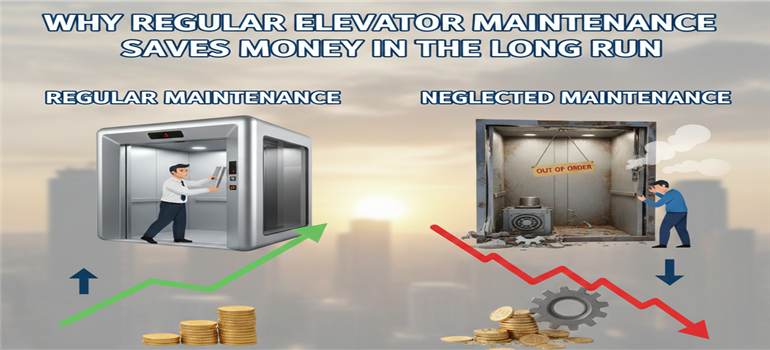
Why Regular Elevator Maintenance Saves Money in the Long Run
Elevators are long-term investments, not short-term expenses. Whether it’s a residential building, villa, office tower, or commercial complex, an elevator that is properly maintained delivers years of safe, smooth, and cost-efficient operation. On the other hand, skipping or delaying regular maintenance may seem like a way to save money—but it often leads to higher costs, frequent breakdowns, and unexpected downtime.
Let’s explore how regular elevator maintenance actually protects your budget and maximizes uptime over the long run.
1. Prevents Costly Breakdowns
Most major elevator failures don’t happen suddenly—they start as small, unnoticed issues. Regular maintenance helps identify worn parts, loose connections, and early signs of failure before they turn into expensive repairs. Fixing a minor issue early costs far less than replacing major components later.
Preventive care = fewer emergency repairs.
2. Extends the Life of Elevator Components
Key elevator parts such as motors, controllers, door operators, and safety systems are designed to last longer when properly maintained. Regular lubrication, calibration, and inspections reduce wear and tear, allowing components to perform efficiently for many more years.
This means fewer replacements and better return on your original investment.
3. Reduces Unplanned Downtime
Elevator downtime affects everyone—residents, tenants, employees, and visitors. In commercial buildings, downtime can disrupt business operations and harm your reputation. Regular maintenance ensures smooth operation and significantly reduces unexpected shutdowns.
Higher uptime = better user experience and fewer complaints.
4. Avoids Emergency Call-Out Costs
Emergency elevator repairs are always more expensive than scheduled maintenance. After-hours service calls, urgent spare parts, and downtime-related losses can quickly add up. With a planned maintenance contract, most issues are handled during routine visits—at a predictable and controlled cost.
5. Improves Energy Efficiency
A well-maintained elevator runs more efficiently. Properly adjusted doors, aligned guide rails, and optimized control systems reduce unnecessary power consumption. Over time, this leads to noticeable savings on electricity bills—especially in high-usage buildings.
6. Ensures Safety and Compliance
Regular maintenance keeps your elevator compliant with safety standards and local regulations. Avoiding penalties, inspection failures, or forced shutdowns saves money and protects building owners from legal risks.
More importantly, it ensures passenger safety—something no cost-saving shortcut should ever compromise.
7. Predictable Maintenance Costs with AMC
Annual Maintenance Contracts (AMC) offer fixed, transparent pricing that helps you plan expenses in advance. Instead of unpredictable repair bills, you get consistent service, priority support, and peace of mind—all while protecting your elevator’s long-term performance.
Regular elevator maintenance is not an expense—it’s a smart financial strategy. By reducing breakdowns, extending equipment life, improving uptime, and lowering energy and repair costs, routine maintenance delivers significant savings over time.
If you want your elevator to perform reliably, safely, and cost-effectively for years to come, investing in professional maintenance is the smartest decision you can make.