Top Safety Standards Every Lift System Should Meet in the UAE
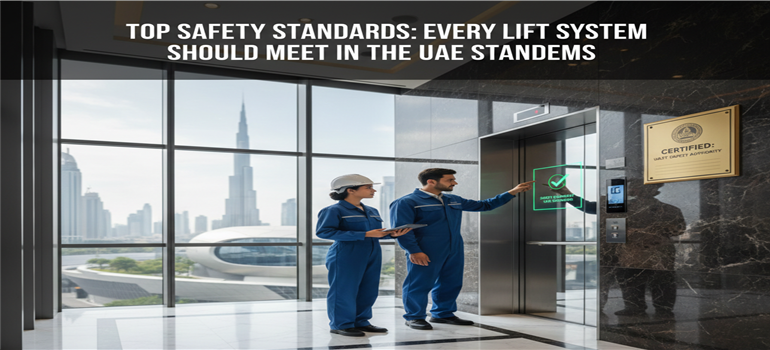
Top Safety Standards Every Lift System Should Meet in the UAE
The United Arab Emirates is renowned for its iconic skyscrapers, luxurious residential towers, and sprawling commercial complexes. With such a high density of multi-story buildings, lift (elevator) systems are not just a convenience but a critical component of daily life. Ensuring the safety and reliability of these systems is paramount, and the UAE has established stringent regulations and adopted international best practices to achieve this.
For building owners, facility managers, and lift maintenance companies, understanding and adhering to these top safety standards is not just a legal requirement but a commitment to passenger safety and operational excellence.
Overview of Industry Safety Requirements and Best Practices in the UAE:
1. Adherence to International Standards (EN 81 Series):
The UAE largely adopts European Union standards for lifts and escalators, primarily the EN 81 series. This comprehensive set of standards covers various aspects of lift construction, installation, testing, and maintenance. Key parts include:
-
EN 81-20: Safety rules for the construction and installation of lifts – Passenger and goods passenger lifts. This covers everything from car design and shaft requirements to machinery and safety gear.
-
EN 81-50: Design rules, calculations, examinations, and tests of lift components. This ensures that individual components meet rigorous safety and performance criteria.
2. Local Authority Regulations and Codes:
While international standards form the backbone, local authorities in each Emirate often have specific building codes and regulations that complement and sometimes augment these.
-
Dubai Municipality (DM): DM has specific requirements and inspection protocols for lift installations and operations, focusing on safety clearances, emergency systems, and maintenance schedules.
-
Abu Dhabi Department of Municipalities and Transport (DMT): Similar to Dubai, Abu Dhabi implements its own set of rules, often aligning with international best practices but tailored to local infrastructure needs.
-
Civil Defense Authorities: Across all Emirates, Civil Defense plays a crucial role, particularly concerning fire safety, emergency evacuation procedures, and the integration of lifts into the building's overall fire safety system. Lifts must have features like firemen's operation and automatic recall to the ground floor in case of fire.
3. Mandatory Certification and Approval:
Before any lift system becomes operational, it must undergo a rigorous certification and approval process by the relevant local authorities. This typically involves:
-
Design Approval: Review of lift specifications, drawings, and calculations.
-
Pre-Installation Inspection: Checking the lift shaft and machine room readiness.
-
Final Inspection and Testing: Comprehensive tests post-installation to ensure all safety features, emergency systems, and operational parameters meet the required standards.
-
Periodic Certification: Lifts require regular re-certification to ensure ongoing compliance.
4. Comprehensive Maintenance and Inspection Regimes:
This is perhaps the most critical aspect of long-term lift safety.
-
Scheduled Preventative Maintenance: Lifts must undergo regular preventative maintenance as per manufacturer guidelines and local regulations (often monthly, quarterly, or annually depending on component). This includes lubrication, cleaning, adjustment, and checking for wear and tear.
-
Qualified Technicians: All maintenance and inspection work must be carried out by certified and experienced lift technicians. Companies must ensure their staff are adequately trained and licensed.
-
Detailed Record Keeping: Thorough records of all maintenance, repairs, inspections, and component replacements must be maintained and made available to authorities upon request.
-
Emergency Call Systems: Lifts must have fully functional two-way communication systems to connect trapped passengers with emergency services or building management.
5. Emergency Preparedness and Safety Features:
Modern lift systems in the UAE are mandated to include a range of safety features:
-
Overspeed Governors and Safety Gears: To prevent uncontrolled descent or ascent.
-
Buffer Systems: To absorb impact in case of overtravel.
-
Door Safety Devices: Infrared sensors or light curtains to prevent doors from closing on passengers.
-
Load Weighing Devices: To prevent overloading the lift car.
-
Automatic Rescue Devices (ARD): In case of power failure, these systems safely bring the lift car to the nearest floor and open the doors.
-
Emergency Lighting: Essential for passenger visibility during power outages.
6. Modernization and Upgrades:
Older lift systems that do not meet current safety standards may be required to undergo modernization or upgrades. This ensures that all lifts, regardless of their age, provide the highest level of safety. Authorities often provide guidelines and timelines for such upgrades.
Conclusion
The UAE's commitment to safety in its built environment extends profoundly to its lift systems. By embracing international standards, implementing robust local regulations, ensuring rigorous certification processes, and enforcing comprehensive maintenance regimes, the country strives to provide a safe and reliable vertical transportation experience for everyone. For stakeholders, prioritizing these safety standards is not just about compliance, but about upholding the trust and well-being of lift users across the Emirates.