Comprehensive Guide to Elevator Installation in UAE
Elevator installation is a critical process that requires careful planning, strict safety compliance, and professional execution. In the UAE, elevator systems must meet international standards as well as local regulatory requirements to ensure safety, efficiency, and long-term performance.
This comprehensive guide explains the step-by-step process of elevator installation in the UAE, from initial site inspection to final certification.
1. Initial Site Visit and Assessment
The first step in elevator installation is a detailed site visit. This stage helps identify project requirements and potential challenges.
Key Activities:
-
Inspecting shaft dimensions and pit depth
-
Checking overhead clearance and machine room space
-
Evaluating structural load capacity
-
Reviewing architectural drawings
-
Identifying electrical and civil work readiness
Purpose:
A proper site assessment ensures that the selected elevator system fits the building structure and complies with safety and engineering standards.
2. Client Consultation and System Selection
After the site visit, a consultation is conducted with the client to understand their specific needs.
Factors Considered:
-
Passenger capacity and traffic flow
-
Number of floors and travel height
-
Usage type (residential, commercial, hospital, villa, hotel)
-
Budget and design preferences
-
Energy efficiency requirements
Outcome:
Based on these factors, the most suitable elevator type is recommended, such as passenger lifts, home elevators, panoramic lifts, or goods lifts.
3. Design Planning and Engineering Approval
Once the system is selected, detailed technical designs are prepared.
Design Includes:
-
Shaft and layout drawings
-
Machine room or MRL configuration
-
Control panel positioning
-
Door openings and finishes
-
Electrical and mechanical schematics
Approval Process:
All drawings are submitted for client approval and coordination with consultants and authorities before proceeding.
4. Regulatory Compliance and Permits
In the UAE, elevator installations must comply with local authority regulations and international safety standards.
Common Standards:
-
EN 81
-
ISO Standards
-
Local municipality and civil defense requirements
-
Dubai Municipality, Abu Dhabi DMT, or relevant authority approvals
Importance:
Obtaining proper permits ensures legal compliance and avoids project delays.
5. Civil and Electrical Preparations
Before installation begins, civil and electrical works must be completed as per approved drawings.
Civil Works:
-
Shaft construction
-
Pit waterproofing
-
Machine room finishing (if applicable)
-
Door opening preparation
Electrical Works:
-
Main power supply
-
Earthing system
-
Lighting inside shaft and machine room
-
Emergency power provision
Proper preparation ensures smooth installation without interruptions.
6. Delivery and Material Inspection
After preparations, elevator equipment is delivered to the site.
Inspection Process:
-
Checking components against packing list
-
Inspecting for transit damage
-
Verifying model and specifications
-
Ensuring safe storage conditions
Any discrepancies are reported immediately before installation begins.
7. Installation Process
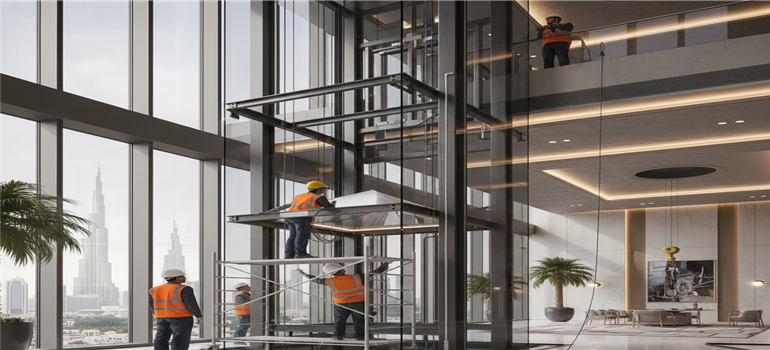
The installation phase is executed by certified technicians following strict safety procedures.
Step-by-Step Installation:
-
Guide rail fixing and alignment
-
Installation of brackets and supports
-
Machine and motor installation
-
Counterweight assembly
-
Car frame and cabin installation
-
Door operator and landing door fitting
-
Control panel and wiring
-
Safety gear installation
Each stage is carefully monitored to maintain quality and accuracy.
8. Safety Checks and Risk Management
Safety is the highest priority during elevator installation.
Safety Measures:
-
Use of personal protective equipment (PPE)
-
Installation barricades and warning signage
-
Fall protection systems
-
Lockout and tagout procedures
-
Regular toolbox meetings
Risk Assessment:
Potential hazards are identified and mitigated through method statements and safety plans.
9. Testing, Commissioning, and Calibration
After installation, comprehensive testing is conducted to verify system performance.
Testing Includes:
-
No-load and full-load testing
-
Speed and leveling accuracy
-
Emergency braking system
-
Door safety sensors
-
Alarm and communication systems
-
Power failure rescue operation
Only after successful testing is the elevator approved for operation.
10. Third-Party Inspection and Certification
Independent inspection bodies and local authorities conduct final inspections.
Certification Process:
-
Safety compliance verification
-
Load and functional testing
-
Documentation review
-
Issuance of operation permit
This certification is mandatory before public use.
11. Handover and Client Training
Once certified, the elevator is handed over to the client.
Handover Includes:
-
Operation manuals
-
Maintenance schedule
-
Warranty documents
-
As-built drawings
-
User training for building staff
This ensures smooth daily operation and basic troubleshooting knowledge.
12. Maintenance and After-Sales Support
Regular maintenance is essential for long-term reliability and safety.
Maintenance Services:
-
Preventive maintenance visits
-
Emergency breakdown support
-
Spare parts replacement
-
Performance monitoring
-
Annual safety inspections
A professional maintenance contract helps extend elevator lifespan and minimize downtime.
Benefits of Professional Elevator Installation
-
Enhanced passenger safety
-
Compliance with UAE regulations
-
Smooth and silent operation
-
Reduced long-term maintenance costs
-
Increased property value
Why Choose a Professional Elevator Company in UAE
Working with an experienced elevator provider ensures:
-
Certified engineers and technicians
-
Compliance with international standards
-
High-quality materials and components
-
Timely project completion
-
Reliable after-sales service
Conclusion
Elevator installation in the UAE is a structured and regulated process that demands technical expertise, strict safety adherence, and professional management. From initial site inspection to final certification and ongoing maintenance, each step plays a vital role in ensuring safe and efficient vertical transportation.
By partnering with a trusted elevator company, building owners and developers can achieve reliable performance, regulatory compliance, and long-term value.
For expert elevator installation services in the UAE, consult a professional provider with proven experience and certified technical teams.