
Elevator Maintenance for Shopping Malls in the UAE: A Facility Manager's Complete Guide
Elevator Maintenance for Shopping Malls in the UAE: A Facility Manager's Complete Guide
Shopping malls are the beating heart of retail and leisure life across the UAE. From the grand destinations of Abu Dhabi and Dubai to the busy retail centres of Sharjah and beyond, these commercial spaces welcome millions of visitors every year — many of whom rely entirely on elevators to move between floors. For facility managers and property teams, keeping those lifts running is not optional. It is a legal requirement, a safety obligation, and a direct contributor to tenant satisfaction and foot traffic revenue.
This guide covers everything a UAE facility manager needs to know about shopping mall elevator maintenance: the unique challenges that high-traffic commercial environments present, the regulations you must comply with, how to structure a proper maintenance programme, and the most cost-effective way to protect your assets long-term.
Why Shopping Mall Elevators Are a Unique Challenge
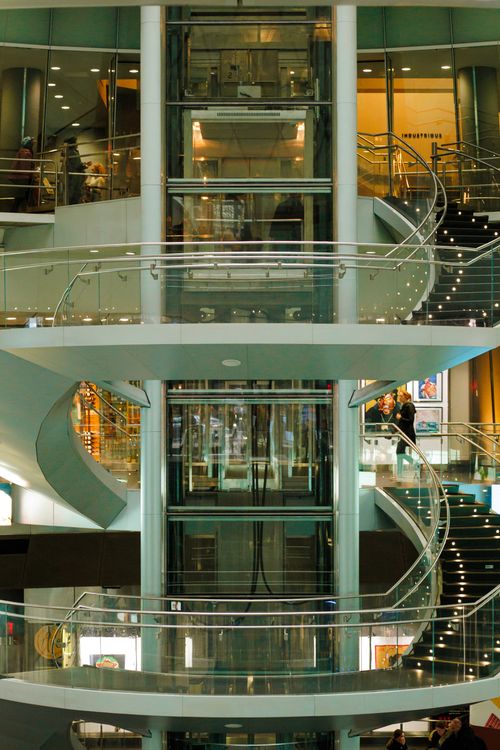
Not all elevators are created equal. A residential lift in a villa serves a handful of people each day. A shopping mall elevator may handle thousands of riders in a single afternoon — families with pushchairs, shoppers carrying heavy bags, delivery staff moving stock, and guests with mobility needs all using the same cabin repeatedly across long operating hours.
This extreme duty cycle places far greater wear on mechanical and electrical components than standard residential or office installations. Door mechanisms, guide rails, cables, braking systems, and control boards all degrade faster under constant, heavy load. A maintenance programme designed for a low-rise apartment block will fall short in a retail environment. Malls need a maintenance regime that matches their operating intensity.
Additional Factors That Accelerate Wear in UAE Malls
- Extended operating hours: Many UAE malls operate 10–14 hours per day, with some open until midnight or beyond on weekends and holidays.
- Air-conditioning extremes: The constant transition between the chilled indoor environment and Abu Dhabi or Dubai's intense outdoor heat creates thermal stress on components in lobby-facing lift shafts.
- Humidity and dust ingress: Coastal humidity and fine desert dust are persistent challenges in UAE buildings, affecting electrical contacts, motor windings, and door sensors.
- Increased load variance: Freight deliveries, event equipment, and trolleys routinely push lifts to their rated capacity — and occasionally beyond — requiring stronger safety margins.
UAE Regulations That Apply to Commercial Elevators
Elevator operation in the UAE is governed at the emirate level. In Abu Dhabi, the Department of Municipalities and Transport (DMT) oversees building and lift compliance. In Dubai, it falls under Dubai Municipality. Both authorities mandate that all elevators in commercial buildings, including malls, must be inspected and certified on a regular basis by an approved third-party inspection body.
Key regulatory requirements that shopping mall operators must meet include:
- Periodic third-party inspection: Commercial elevators must pass a certified technical inspection — typically annually — to receive a valid operating permit.
- Licensed maintenance contractor: Only companies licensed and approved by the relevant authority may carry out maintenance on commercial lifts. Facility managers must keep records of the maintenance provider's licence.
- Maintenance logs: A physical or digital logbook must be maintained on-site, recording every service visit, fault, repair, and inspection outcome.
- Emergency rescue capability: Lifts must have a functioning intercom system connecting to a permanently staffed monitoring point, and emergency rescue procedures must be documented and tested.
- Load capacity compliance: Elevators must be clearly marked with their rated capacity and must not be operated beyond it.
Non-compliance can result in an immediate shutdown order from inspectors, substantial fines, and reputational damage to the mall operator. Staying ahead of these requirements through a structured maintenance programme is always cheaper than reactive enforcement action.
Learn more about how professional elevator maintenance keeps your assets compliant year-round.
What a Proper Mall Elevator Maintenance Programme Looks Like
For a shopping mall environment, maintenance should be structured across three tiers: routine scheduled visits, condition-based monitoring, and annual overhaul. Relying on breakdown maintenance alone — only calling a technician when something fails — is a high-risk strategy in a public-facing, high-footfall venue.
Monthly Preventive Maintenance
At a minimum, a qualified technician should visit each lift unit monthly. During a monthly service, the engineer will inspect and lubricate guide rails, check door alignment and closing force, test safety devices including overspeed governors and buffers, inspect control panel connections, and test the emergency alarm and intercom. Any minor anomalies are corrected before they escalate into failures.
Quarterly Checks
Every quarter, the scope should extend to include motor and drive unit inspection, brake adjustment checks, rope tension assessment, electrical insulation testing, and a review of the hydraulic system if applicable. This deeper inspection catches wear patterns that monthly visits may not surface.
Annual Overhaul and Recertification
Once per year, a comprehensive overhaul should be scheduled during off-peak hours — ideally overnight or during a low-footfall period. This includes load testing, full safety certification, replacement of any components approaching end of service life, and preparation for the statutory third-party inspection. Passing this inspection is what secures the operating permit for the following year.
See the full range of elevator services available in the UAE from installation through to full lifecycle management.
Critical Warning Signs That Need Immediate Attention
In a busy mall, minor faults can quickly become major safety events. Facility managers and mall operations staff should know the red-flag signs that require an immediate call to the maintenance team — rather than waiting for the next scheduled visit:
- Doors that fail to close fully, or that reopen repeatedly without obstruction
- Unusual noises during travel — grinding, clicking, or banging sounds
- Levelling issues where the cabin floor does not align with the landing floor
- Slow or jerky acceleration or deceleration
- Unexpected stops between floors or failure to respond to button inputs
- Alarm or emergency lighting activation during normal operation
- Visible oil leaks at the base of a hydraulic unit
Any of these signs should trigger an immediate call to your maintenance provider. In a high-traffic setting, a partially functioning lift represents a serious safety risk and liability exposure.
The Case for an Annual Maintenance Contract (AMC) in Shopping Malls
For shopping malls with multiple elevator units — which is typical for medium to large retail developments — managing maintenance on a call-out basis becomes chaotic and expensive very quickly. An Annual Maintenance Contract (AMC) with a specialist elevator company is by far the most cost-effective and operationally sound approach.
An AMC for a shopping mall typically includes:
- A fixed number of scheduled preventive maintenance visits per year for every unit covered
- Priority emergency response, often within two to four hours, 24 hours a day, seven days a week
- Labour costs for breakdown callouts covered under the contract
- Discounted or included replacement of specified wear parts
- Dedicated technical account management so the engineer who attends knows your site's history
- Documentation support for regulatory inspections and permit renewals
Compared to paying ad hoc callout fees — which in the UAE can range from AED 500 to AED 3,000 per visit depending on the fault and time of day — an AMC provides predictable costs and faster response. For mall operators with six, ten, or more lifts on site, the savings and reliability gains are substantial.
Discover how an elevator maintenance contract can reduce both downtime and operational costs across your mall's entire lift fleet.
When to Consider Modernisation Instead of Maintenance
Not every lift problem can be solved by maintenance alone. If your mall has elevator units that are more than 15–20 years old, you may be reaching the point where ongoing repairs are delivering diminishing returns. Aging control systems, obsolete spare parts, and outdated safety technology are signs that modernisation may be more cost-effective than continued reactive maintenance.
Modernising an existing elevator — upgrading the control system, drive unit, door operators, and cab interior while retaining the shaft structure — is typically 40–60% less expensive than a full replacement installation. It also extends the asset's life by 15–20 years and brings safety standards up to current UAE requirements. For malls undertaking a refurbishment or rebranding project, modernisation is also an opportunity to upgrade the cabin aesthetics to match the new look.
Learn more about lift modernisation options in the UAE and how to evaluate whether your units are candidates for an upgrade.
Choosing the Right Elevator Maintenance Partner for Your Mall
Not all maintenance companies are equal, and for a shopping mall with high public liability exposure, the selection process matters. When evaluating providers, facility managers should look for:
- Licensing and accreditation: Confirm the company holds the relevant trade licences from the applicable UAE authority and has a track record of working with commercial properties of comparable scale.
- Response time guarantees: A mall cannot afford a lift to be out of service for 24–48 hours. Your contract must include a specific emergency response time commitment, and you should verify it against the provider's actual track record.
- Parts availability: A local provider with an in-country spare parts inventory will restore service far faster than one that needs to import components.
- Technical staff: Ask about the qualifications and ongoing training of the technicians who will service your site. Elevator technology is advancing rapidly, and your provider's team needs to keep pace.
- References from comparable sites: Ask for references from other malls, large retail developments, or commercial complexes the company maintains. Site visits to observe their work quality are a reasonable request for high-value contracts.
Take the Next Step with Morris Elevators
Morris Elevators is a UAE-based specialist in elevator installation, maintenance, and modernisation, serving commercial and residential clients across Abu Dhabi, Dubai, and the wider UAE. Our team works with shopping malls, retail developments, hotels, and facility management companies to deliver structured, compliance-focused maintenance programmes that keep lifts running safely and efficiently under the most demanding operating conditions.
We offer flexible Annual Maintenance Contracts tailored to the specific demands of high-footfall commercial environments, with guaranteed emergency response times and dedicated technical support. Whether you manage a single retail centre or a portfolio of commercial properties, our team can design a maintenance solution that fits your operational needs and budget.
Contact Morris Elevators today on +971 2 555 2727 or email [email protected] to discuss an AMC for your mall's elevator fleet. Let us handle the compliance, the callouts, and the paperwork — so your team can focus on running a great shopping destination.